
Bi-Fold Windows: The Ultimate Window Solution for Modern American Homes
Bi-fold windows are not just a design trend — they are a functional, code-compliant, energy-efficient fenestration solution tailored to American lifestyles and building requirements.
2/28/20263 min read
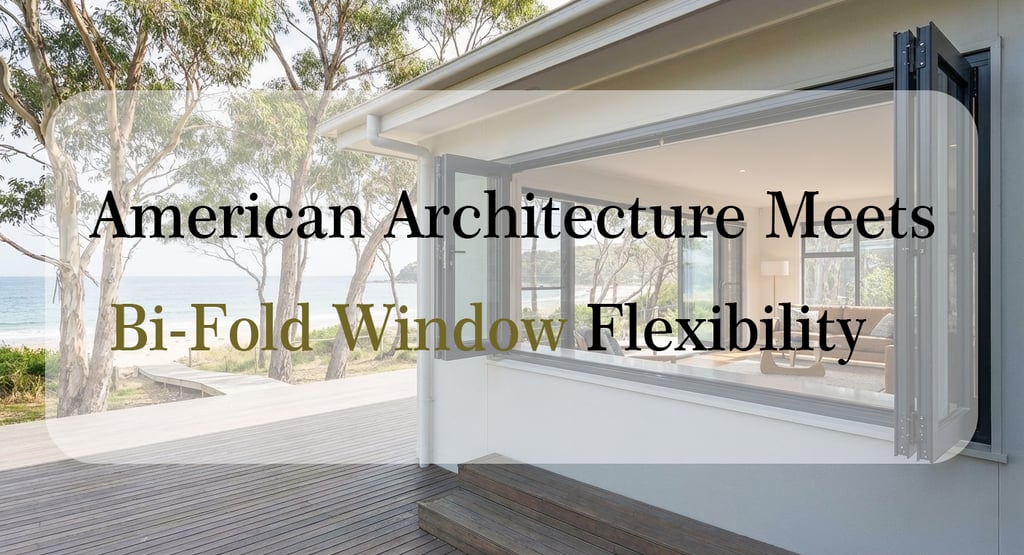
Across the United States, homeowners are embracing open-plan living, indoor-outdoor connectivity, and high-performance building envelopes. Bi-fold windows deliver on all three fronts — making them increasingly popular in both new construction and renovation projects across varied U.S. climates from California to Florida and New England.
Maximized Views & Openness: bi-fold windows eliminate fixed barriers, offering uninterrupted sightlines and spatial fluidity.
Seamless Indoor-Outdoor Living: perfect for patios, BBQ areas, poolside views and alfresco kitchens.
Custom Configurations: choose from many panel counts, stacking directions and corner options.
American Architecture Meets Bi-Fold Flexibility
Key Benfits
Bi-Fold windows operate via a track system, where the panels fold along hinges and slide smoothly along the track. This allows the window to open fully, providing flexible ventilation and control over the amount of natural light and views
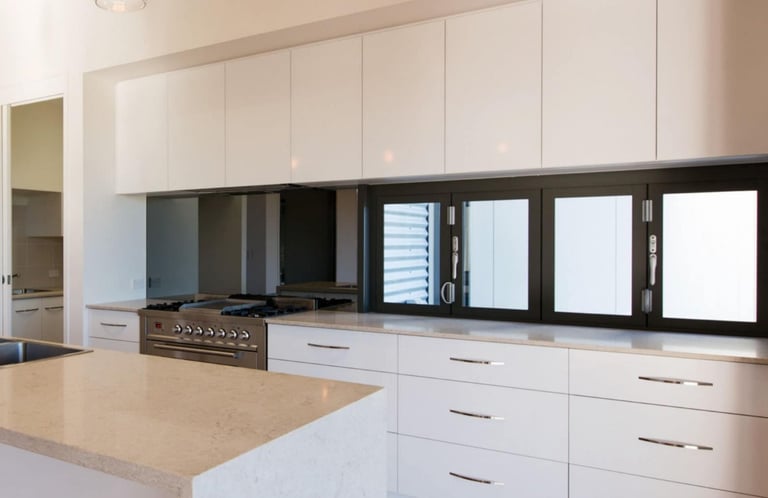
Bi-Fold windows are commonly used in commercial spaces like restaurants and cafés to connect indoor and outdoor areas. Recently, they have become popular in residential projects, especially in kitchens and living rooms, to create a seamless flow between indoor and outdoor spaces
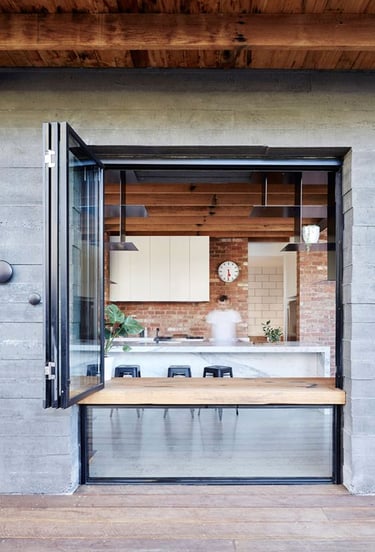
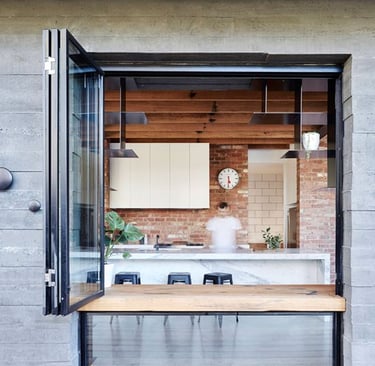
Bi-fold windows fold fully to the side, creating expansive openings that blur the boundary between indoor spaces (like kitchens and living rooms) and outdoor patios or decks. This aligns with American lifestyles that favor backyard entertaining, open kitchens, and panoramic views.
In the U.S., windows and doors must be compliant with local building codes and energy regulations — notably:
Compliance with American Building Codes
International Residential Code (IRC) and International Building Code (IBC), developed by the International Code Council, form the basis of most state and local codes.
Energy efficiency performance is tracked via NFRC (National Fenestration Rating Council) certification.
NFRC labels provide objective performance ratings — including U-factor, Solar Heat Gain Coefficient (SHGC), visible light transmittance (VT) and air leakage — essential for energy code compliance in new builds and renovations.
The U.S. has diverse climates — from hot humid Southeast to cold Northern states. Optimizing window performance is essential for energy savings:
Energy Efficiency Across U.S. Climate Zones
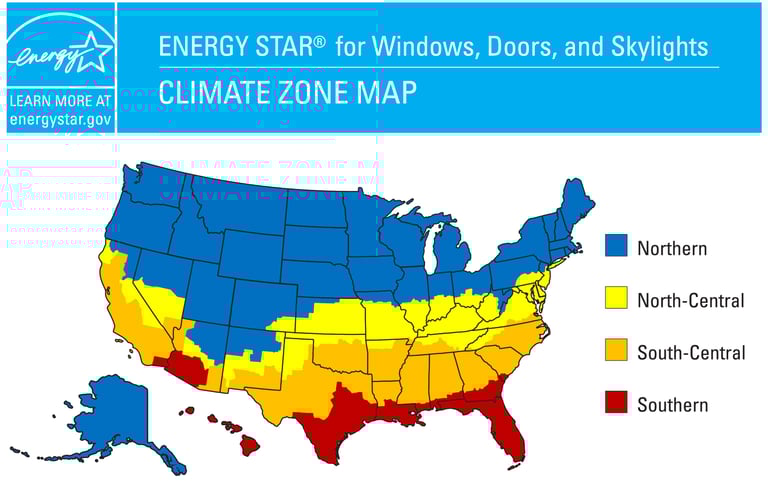
ENERGY STAR® certified windows help homeowners reduce heating and cooling costs; according to EPA data, ENERGY STAR-qualified windows can save about 12% on energy costs annually on average.
NFRC performance ratings help architects and builders select windows with the right U-factor and SHGC for specific climate zones.
Structural Performance of Aluminum Bi-Fold Windows
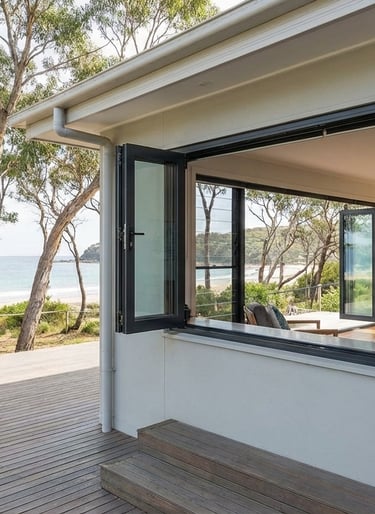
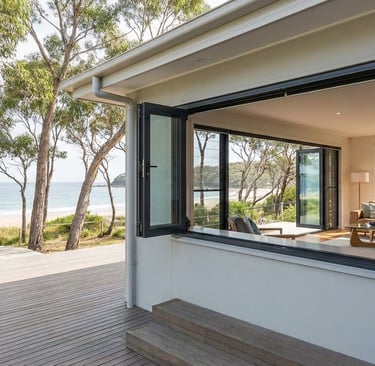
Because a bi-fold window system includes multiple connected panels, structural integrity is critical.
In the U.S., aluminum bi-fold windows are typically tested under:
AAMA/WDMA/CSA 101/I.S.2/A440
ASTM E283 (Air Leakage)
ASTM E547 (Water Penetration)
ASTM E330 (Structural Load)
For coastal regions such as Florida, impact-rated bi-fold windows with laminated glass may be required to meet hurricane codes.
A properly engineered aluminum bi-fold window should include:
Reinforced interlocking stiles
Heavy-duty roller carriers
Multi-point locking systems
Stainless steel hardware
DP (Design Pressure) rating suitable for the project location
For developers and contractors, specifying a tested and certified bi-fold window system reduces liability and ensures inspection approval.
Thermal Break Technology in Modern Bi-Fold Window Systems
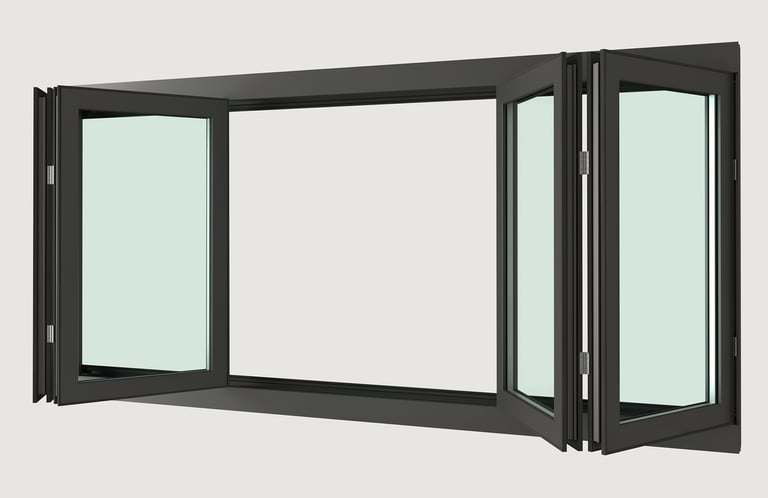
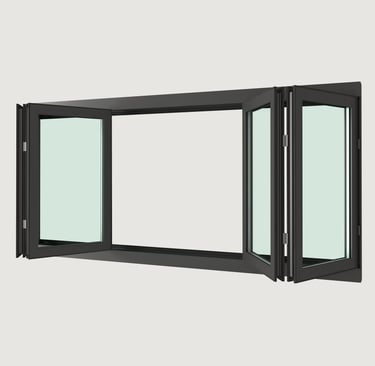
One major improvement in modern aluminum bi-fold windows is the integration of thermal break technology.
A thermally broken bi-fold window includes:
Polyamide insulation strips separating interior and exterior aluminum
Reduced condensation risk
Improved indoor comfort
Lower HVAC load
Without thermal break, an aluminum bi-fold window may not meet U.S. energy code requirements in colder states.
For projects in the Northeast or Midwest, triple-glazed bi-fold windows may be recommended.
Why Developers Are Choosing Bi-Fold Windows
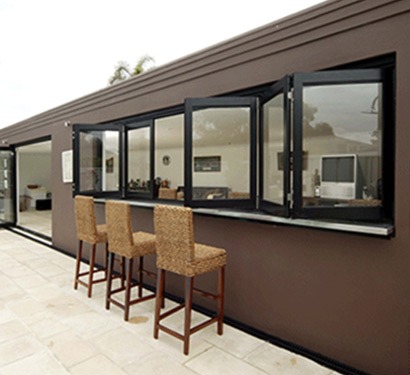
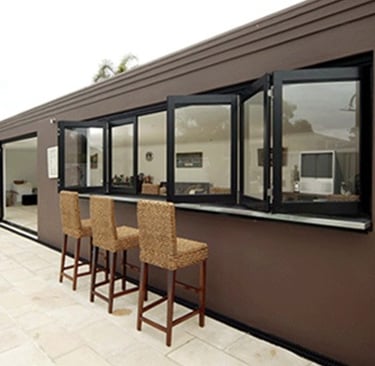
For American developers and luxury home builders, bi-fold windows provide:
Architectural differentiation
Increased property value
Premium kitchen upgrades
Enhanced resale appeal
Strong indoor-outdoor lifestyle positioning
A modern bi-fold window system is often paired with folding glass doors to create a unified façade solution.
In high-end residential construction, a large aluminum bi-fold window is no longer a niche product — it is becoming a premium feature.
Why Developers Are Choosing Bi-Fold Windows
Enhanced Conclusion
For the U.S. market, bi-fold windows must go beyond aesthetics. They must:
Meet IECC energy standards
Carry NFRC certification
Comply with ASTM structural testing
Offer hurricane options where required
Provide durable hardware engineered for heavy panels
Innovation
quite
info@gbachasefacade.com
© 2024. All rights reserved.
window system
DOOR system